

The Stages of an Architectural Project: The Construction Phase (4/4)
- Kim Cloutier

- Feb 14
- 10 min read
After the design and planning stages, comes the most eagerly awaited moment of any architectural project: the construction phase. It’s an exciting yet demanding period, where walls begin to rise and the spaces once imagined on paper slowly take shape. Noise, dust, surprises, last-minute decisions… Everything moves faster, everything feels technical, and suddenly this project you thought you fully understood becomes unfamiliar territory.
Yet, contrary to what we often imagine, this isn’t just a simple “automatic execution” of the plans. Every step requires decisions, quality control, and tight coordination between various professionals. At this stage, it’s completely normal to have questions. Will the right decisions be made? Who ensures everything is compliant? What happens if something goes off track?
This is precisely the moment when the architect’s role takes on its full strategic dimension. Their work doesn’t end once the plans are signed—quite the opposite. On site, the architect becomes your representative, your technical anchor, and your safeguard. They coordinate, monitor, and anticipate. They ensure that the decisions made upstream are carried through to the very last detail.
In this article, we’ll walk through the key stages of the construction phase—from demolition to handover—highlighting at each moment the concrete role the architect plays in ensuring the project’s quality, coherence, and peace of mind.

Demolition and/or Excavation: Preparing the Site
The first step of a construction site is preparing the grounds—either by demolishing the existing structure or by proceeding directly with excavation in the case of new construction.
Demolition and Interior Strip-Out: Clearing the Slate with Care
In a renovation project, demolition can be either selective or complete. When done properly, it allows certain materials to be recycled or reused. But it can also bring a few surprises:
unexpected load-bearing walls,
soil contamination,
poorly documented older foundations.
At this stage, the architect works closely with the engineer and the contractor to determine what must be removed and what can be preserved. Since unexpected issues are common, it’s wise to allow a buffer in both budget and schedule. Depending on the scale of the work, this phase can last from a few days to several weeks.
Excavation: Preparing the Foundations
In the case of an extension or a new build, once the site has been cleared and secured, you can move on to the next step: excavation, which prepares the ground for the new foundations.
Excavation consists of digging into the soil to create the future structural base of the building (footings, crawl space, basement). It’s a crucial step, as it directly influences the stability of the house and the quality of the foundations that will follow.




Key Technical Points to Monitor
Demolition: identifying load-bearing walls and previously unknown elements hidden within the walls, managing materials for recycling, and detecting the presence of contaminants (asbestos, lead, mold).
Excavation: depth and stability of the slopes, soil quality (bearing capacity, drainage), respect for property boundaries, and protection of neighboring foundations.
Foundations : Pouring the Base
The foundation stage is a decisive moment in any construction project. It ensures the building’s stability as well as its correct positioning on the site. A mistake at this stage can have major consequences later on, since the entire project rests on these foundations.
Here is a chronological overview of the steps involved in building a structure’s foundations, how they unfold, and how your architect ensures that every detail meets both expectations and standards.
1. Footing Formwork
The first step is installing a wooden mold (the formwork) into which the footings are poured—these are concrete strips that distribute the weight of the house evenly across the ground. At this stage, the architect verifies the precise layout, depth, and reinforcement, in coordination with the structural engineer. A mistake here can compromise the stability of the entire construction.
2. Foundation Wall Formwork
Once the footings have cured, the formwork and pouring of the foundation walls begin, typically using reinforced concrete. The architect ensures that the walls meet the required dimensions and that all technical elements (e.g., plumbing or electrical entries) and window openings are properly planned.


3. Waterproofing: Preventing Infiltration
Once the forms are removed, a waterproof membrane or coating is applied to the exterior faces of the foundation walls to prevent any water infiltration. At this stage, the architect checks the quality of the application, the continuity of the membrane, and sensitive areas such as joints and corners.
4. Exterior Insulation: Preventing Heat Loss
Exterior insulation consists of attaching rigid insulation panels to the foundation walls, improving the building’s overall energy efficiency. Here, the architect ensures the selected materials are compliant, that the correct thickness is used, and that the installation is well executed to maintain the continuity of the building’s thermal envelope.
5. French Drain and Drainage Membrane: Controlling Water Management
All around the foundations, a perforated drainpipe is installed, wrapped in a filtering membrane that prevents particles from clogging the system. It is then connected to a sump pit inside the building. The architect verifies the drain’s placement, its slope for proper flow, and its correct connection to the planned system to ensure efficient groundwater management.


Key Technical Points to Monitor
Depth, thickness, and level of the foundations
French drain and waterproofing
Installation of wall or under-slab insulation
Structural details (footings, reinforcement) — verified by the structural engineer
Structural Frame: Watching the Volumes Rise
This is the most striking stage: the house takes shape before your eyes. In just a few weeks, the walls rise, the floors are installed, and the structure comes together. The frame is the skeleton of the house. It can be built using light wood framing, mass timber, or steel, depending on the chosen design.
Main Steps in Building the Structural Frame:
1. Ground Floor Structure
Once the foundations are complete, the ground floor structure is installed. It rests directly on the foundations or on crawl-space walls. This forms the base of the entire structure.
2. Exterior Walls
The exterior load-bearing walls are then assembled. This is the first moment when the house visibly starts to rise. The planned openings—windows, doors, and glazed bays—are already integrated at this stage.
3. Load-Bearing Walls, Columns, Beams, and Upper Floor Structure
If the house includes an upper floor, the structural elements that support it are then installed: interior load-bearing walls, structural columns, beams, and finally the upper floor system. These components must fit together perfectly to ensure overall stability. Alignment between levels and proper load distribution are carefully verified.
4. Roof
The roof can be built using prefabricated trusses or traditional framing. This step gives the house its final shape. Once the roof structure is in place, the roofing material is installed quickly to “close” the building—meaning to protect it from rain. This allows teams to continue working inside regardless of the weather.


During this phase, the architect ensures that each structural element is correctly positioned, properly sized, and in accordance with the plans. They also verify floor and ceiling heights, their levelness, and the alignment between different construction elements (walls, openings, beams, etc.). This verification is not just a matter of technical compliance: it ensures that future installations—stairs, partitions, and mechanical equipment—can be properly integrated.
Key Technical Points to Monitor
Levels and alignment of floors and ceilings
Position of load-bearing walls, columns, and beams
Compliance and dimensions of openings (doors, windows, stairs)
Insulation and Waterproofing: The Core of Performance
Insulation and waterproofing are two key steps in ensuring the building’s thermal comfort, energy efficiency, and durability. It’s not just about “which material to choose”: the sequence and quality of installation for each layer are what really matter. Here’s how these steps are carried out on site:
1. Installation of Rigid Exterior Insulation
As soon as the exterior walls are assembled, rigid insulation is often installed on the outside (such as wood fiber panels or polystyrene). It improves thermal efficiency by reducing thermal bridges through the structure.
2. Installation of the Air/Weather Barrier
Over the rigid insulation, an air barrier membrane is fixed to prevent wind from penetrating the walls while allowing moisture to escape outward. This is an essential barrier against air and water infiltration.
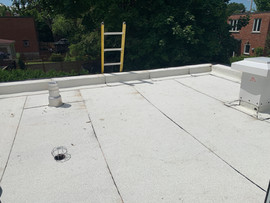
3. Installation of the Roof Covering
Once the frame is in place, the roof covering (shingles, membrane, metal sheets, etc.) is installed quickly. This makes the building watertight, protecting the insulation layers that will be installed afterward.


4. Interior Wall Insulation
Once the exterior walls are closed, the interior cavities are insulated using mineral wool or blown-in cellulose. This layer complements the exterior rigid insulation to create an effective thermal envelope.
5. Installation of the Vapor Barrier
Finally, a vapor barrier (or vapor retarder) is applied to the interior side of the wall. It blocks water vapor coming from inside the house, preventing moisture from entering the wall cavities, which could lead to mold problems.


6. Window Installation
Windows are installed once the walls are prepared, typically after the wall membranes are in place. They must be installed carefully, with sealing membranes around the entire frame to prevent air and water infiltration. Their position within the wall thickness is also crucial: if they are set too far outward, it can create thermal bridges. Proper installation helps minimize energy loss.


At this stage, the architect plays a crucial quality control role. They inspect the installation of insulation, check critical junctions (corners, angles, window perimeters, and duct passages), and ensure the continuity of the insulation envelope and membranes. They may recommend a blower door test if necessary and correct certain details before they are concealed by finishes. This step is often invisible once the construction is complete, but it will make a significant difference to your energy bills—and the daily comfort you experience.
Key Technical Points to Monitor
Joints and overlaps of membranes (air barrier, vapor barrier)
Continuity of insulation
Positioning and sealing of windows
Roof covering
Interior Partitions and Technical Systems
Interior Partitions
Once the insulation and membranes are in place, the interior layout work begins.
Partitions are used to divide spaces according to the plans. Before they are erected, floor markings are made to validate their position in the actual space and to coordinate the routing of technical systems. This preparation step helps prevent costly modifications and conflicts between trades as construction progresses.




Technical Systems: Plumbing, Mechanical, and Electrical
Next comes the installation of technical systems—everything that will be hidden once the walls are closed but will directly impact your daily comfort: plumbing pipes, heating and ventilation ducts, electrical wiring, and home automation systems.
This is a delicate phase, as multiple trades work simultaneously in a confined space. Coordination is handled by the general contractor, who plans and organizes the subcontractors’ work to avoid spatial conflicts and delays.
The architect, meanwhile, monitors the choices and adjustments made along the way. They intervene if a technical decision could affect interior layout, aesthetics, or the project’s energy performance. Together, the contractor and architect form a monitoring duo that ensures the technical systems are invisible, functional, and durable.

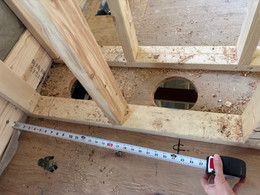


Pre-Drywall Inspection: A Crucial Check Before installing the drywall, the architect conducts a thorough inspection. This is the last opportunity to verify insulation, ducts, electrical outlets, and technical passages before they are hidden behind the walls. A misplaced cable, a conduit running through a beam, a poorly sealed insulation joint—these small details may seem minor, but they can be costly later on. This inspection also allows documentation of the interior of the walls (through photos) to anticipate any future work: renovations, repairs, or even simple wall drilling.
Key Technical Points to Monitor
Positioning of ventilation ducts
Routing of plumbing
Electrical outlets, switches, and specialized wiring
Interior and Exterior Finishes: The House Takes Shape
This is the most visible phase of the construction: the house finally takes on its final appearance. Raw surfaces disappear, finishing materials are installed, and every aesthetic choice becomes tangible.
Exterior Cladding Installation
On the outside, the chosen cladding is installed (wood, brick, fiber cement, metal sheets, etc.). This step protects the building from the elements while defining its architectural style.


Drywall Installation and Plastering
Gypsum boards are attached to walls and ceilings, then taped and covered with plaster to create smooth surfaces ready for paint or decorative finishes.
Floors and Wall Coverings
Next comes the installation of floor coverings and wall finishes: wood, ceramic, etc.


Painting
Walls and ceilings then receive their coat of paint.
Interior Door Installation
Next, the interior doors and their frames are installed.
Frames, Moldings, and Baseboards
Once the floors are in place, door frames, window trims, decorative moldings, and baseboards are added.
Built-in Furniture, Kitchens, and Bathrooms
Fixed installations follow: kitchen cabinets, countertops, built-in furniture, and bathroom finishes (sinks, vanities, showers, bathtubs).
Final Finishes
Finally, lighting fixtures, handles, accessories, and other details are installed to complete the project. This final touch transforms the construction site into a home ready to welcome its occupants.





Key Technical Points to Monitor
Drywall and Joints: Ensure smooth surfaces and avoid visible bumps or cracks.
Doors and Frames: Check plumb, proper clearance, and alignment with walls.
Floors: Verify levelness, joint layout (pattern), and transitions between rooms.
Moldings and Baseboards: Ensure tight joints and clean finishes at corners and junctions.
Paint: Uniform color and finishes, free of drips or marks.
Built-in Furniture and Bathrooms: Secure anchoring, watertight connections, and alignment with walls and floors.
Finishes are the most visible part of the construction for occupants. Careful workmanship prevents obvious defects and costly rework. The architect and contractor work together to ensure the quality of materials, aesthetic consistency, and durability of the choices made.
Handover: The Conclusion… and the Beginning of a Life
Once the construction is complete, the architect conducts the final inspection with you. Every detail is reviewed: alignments, finishes, and the functioning of all systems. This is also when you receive the essential documents for the building’s longevity:
“As-built” plans
Maintenance manuals
Warranties
This marks the culmination of a sometimes long process, but also the beginning of your life in a space thoughtfully designed, planned, and built to last. It signals the end of the construction phase… and the start of your story in this new environment.
Conclusion: Experiencing Construction Step by Step
You now have a clear view of the main stages of a construction project, from demolition to finishes. Each phase has its technical challenges, but also key points to monitor that, if managed properly, ensure the project’s quality and durability. Without guidance, a construction site can quickly become a source of stress: unexpected issues, delays, costly mistakes. Between technical choices, coordination of trades, and the quality of finishes, it’s easy to feel overwhelmed.
Here, our role doesn’t stop at the plans. We are present on site to ensure coherence, anticipate problems, and protect your interests at every stage. By working hand in hand with the contractor and subcontractors, we turn what could be a challenging process into a smoother, more reassuring experience that remains faithful to your vision.


